
Describing a photo in Italian
Describing a photo out loud is the fastest way to grow everyday vocabulary and loosen your tongue. Pick a scene, describe it and get instant AI feedback on content, grammar, vocabulary and fluency. Free, in your browser.
Pick a photo and describe it — out loud or in writing:

Una cena in famiglia
A family dinner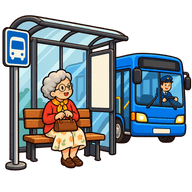
Alla fermata dell’autobus
At the bus stop
Al parco
In the park
Dal medico
At the doctor's
Al mercato
At the market
Al bar
In a café
In classe
In the classroom
Al mare
At the seaside
Allo sportello
At the service desk
Al supermercato
At the supermarketWhat it is for
One clarification, because you will read the opposite elsewhere: the Italian A2 state language test has no oral part. It consists of listening, reading and written interaction, and nothing else. Describing a photo is therefore not one of its papers.
It is, however, one of the highest-yield exercises there is. A photo forces you to name people, clothes, places, objects and actions all at once — exactly the vocabulary you then meet in the reading texts and the listening recordings. And it trains speaking for the integration-agreement interview, which is oral: a two-to-five-minute conversation judged on whether you make yourself understood, not on flawless grammar.
A practical tip: start with the whole ("in the photo you can see…"), then go down into detail using prepositions of place (in front, behind, on the left, in the background), and finish with an impression or a guess ("it looks as if…"). One sentence is not enough to show what you know.
How the AI feedback works
You type your description in the box and it is graded as text. You get a score out of 27 across four criteria — content, grammar, vocabulary and fluency — with the points you missed, vocabulary suggestions and an example of a good description.
Every photo has a "Help" panel with the key words of the scene translated into your language, so you can look at them before you start rather than freeze mid-sentence. Free, and no sign-up.
Frequently asked questions — photo description
Is describing a photo part of the Italian A2 test?
No. The A2 test for the EU long-term residence permit consists of three written papers — listening, reading and written interaction — and has no oral part at all. This is a practice exercise.
Then why do it?
Because it makes you use, in one go, the vocabulary of people, places, objects and actions that the other papers need — and because it trains speaking for the integration-agreement interview, which is oral.
How much should I say?
A few full sentences: who is there, what they are doing, where, and what impression it gives you. A one-line answer shows neither vocabulary nor fluency.
Can I record my voice instead of typing?
No — the description is written. The site neither records nor transcribes speech: no exercise asks for your microphone. If speaking is your goal, say the description out loud before you type it.
How is the description graded?
With a score out of 27 across four criteria — content, grammar, vocabulary and fluency — plus a comment and an example of a good description.